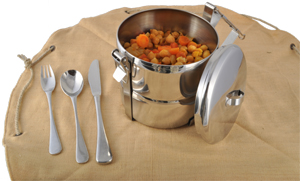
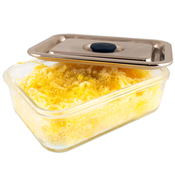
26 January 2011 — I have already discussed my reservations about microwave ovens and their links with cancer (see myolder post: Stainless Steel in Toaster Oven Prevents Aluminum Garnish on Burrito). However, many people find them extremely useful and they are a common feature at schools and office cafeterias. Fortunately, we have discovered a fantastic new line of products which allow you to re-heat your food in a microwave without worrying about plastic touching your food. These are borosilicate glass food containers that are heat and cold resistant. They can be used to warm up food in the oven, toaster oven, microwave oven and they can also store food in the freezer. They come with an 18-8 food grade stainless steel lid featuring an ingenious silicone seal system that allows you to create an airtight seal by pressing a button. To release the seal, the button just needs to be pulled up.
The Perfect Tray for Last Minute Breakfast in the Car
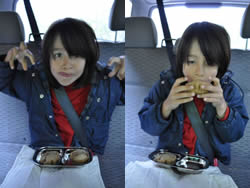
If you are like me, you probably rush to the last minute in the morning in order to get your child’s lunch ready on time while making sure he gets dressed, eats his breakfast and brushes his teeth. Unfortunately, sometimes I am just not efficient enough to get all these tasks done on time, so we have to leave quickly and bring our son’s breakfast in the car. We just found these really practical little food trays, just perfect for breakfast in the car. Mind you, they are also great for the picky kid who doesn’t like it when various parts of his meal mingle together. The tray is made in Korea of high quality stainless steel 18/8. It is of course BPA-free, phthalate-free, lead-free and it is dishwasher-safe.
How clean is your bin?
September 2011 — First, an embarassing confession: I meant to write this blogpost, er, um, about a year ago. Life happens. Here it is finally. Thankfully, it is still relevant. Correction: More relevant than ever.
Just over a year ago we had the pleasure and honour of co-sponsoring – with our friends at La Forêt andThe Black Sheep Inn – a Wakefield, Quebec screening of the funky, powerful, funny, award-winning, *important* indie documentary The Clean Bin Project. I’ll get to why it is so important a little later.
The dynamic, waste-busting, film-making duo of Vancouverites Jen and Grant embarked on a year-long project they dubbed their “zero waste, consumer-free year”.
Their mantra: “The goal is zero landfill waste. For one year we will not buy any material goods and will attempt to live without producing household garbage.”
Polyester and Nylon are NOT Compostable
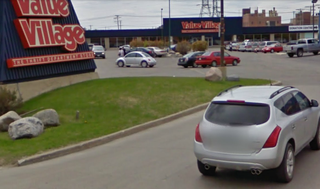
I must admit, I do not follow fashion. I am not sure what is “in” right now. I just buy the styles, colours and fabrics I like to wear. I am kind of an unintended anti-fashionista. I almost always shop at thift stores because not only do I save a lot, but I also find the most interesting pieces of clothing. My favourite thrift store is the Value Village located on Pembina Street in Winnipeg, Manitoba, Canada, which I visit every time we travel to Winnipeg to spend time with Jay’s parents (see photo taken from Google Street View). One thing I always check when picking my clothes is the fabric label. I always want to make sure the item is made of a natural fabric. I am always astonished at the amount of synthetic fabric used in clothing. A large majority of clothes are made of synthetic fibres which do not biodegrade, are not compostable and take a very long time to decompose according to an article published in Grist:
On Khadi: Fabric of Freedom
Before I even get into khadi and why it is much more than just a silky soft, hand spun, hand woven fabric made in India, some background is in order.
I was born and raised in Canada, but my roots are part Bengali on my father’s side. Bengali people hail from Bangladesh or West Bengal, the northeast Indian state adjacent to Bangladesh. In 1947, India achieved its independence after 200 years of British colonialism and oppression. Independence came at a divisive price as India was partitioned into the dominions of India and Pakistan following violent conflict between Hindu and Muslim extremists. At that time, what is now Bangladesh became East Pakistan. This is where my father grew up until adolescence and where our family had lived for ages. Overnight there was a mass migration of Muslims out of India into Pakistan, and of Hindus out of Pakistan into India. Our family was part of that teeming human flow moving from East Pakistan into West Bengal. Generations of family heritage were left behind overnight in exchange for survival. (Map Image: ©National Maritime Museum, London)
Plastics and Breast Cancer
11 September 2010 — Plastics can cause or contribute to breast cancer. Our dear friend Janet has breast cancer and we can’t help but wonder if some plastic chemicals have played a role in the development of her disease. When she was first diagnosed, she had stage 3 breast cancer in 2005 and was still breastfeeding her 6 month old son. Stage 3 means that although her cancer had not spread to other organs, some cancerous cells had been found in her lymph nodes. She immediately had her right breast surgically removed and started chemotherapy. Two years later, her cancer progressed to stage 4 when metastases were found in her lungs. After treatment her cancer went into short remission and then last summer, a tumour was found in her brain. As she puts it, she “tripled” her prognosis and one year later leads a very full and active life. She continues to be very involved on the advocacy front, trying to help traditional medicine embrace a more holistic approach toward cancer.
Plastic Residue from Blood Bags End Up in Blood Stream
10 October 2010 — A friend of ours who is a major cycling fan sent us this news story about Alberto Contador, the Spanish cyclist who won the Tour de France this summer (and last year). Apparently he is suspected of having used the performance-enhancing drug called clenbuterol through intravenous supply. He says that it is through food cross-contamination that traces of the drug ended up in his bloodstream. However, along with traces of the drug, officials also found “traces of a plastic residue the same as the type used to manufacture blood bags”. So he is probably lying…
How about some sustainable Apartment Therapy?
5 November 2010 — Their motto is “saving the world, one room at a time” and they are one of THE go to places for all things design. Apartment Therapy is a juggernaut in the online design world because they make design easy and accessible. And they do it with flair. Their mission is to help people “make their homes more beautiful, organized and healthy by connecting them to a wealth of resources, ideas and community online.” And this while trying to reduce people’s reliance on stuff.
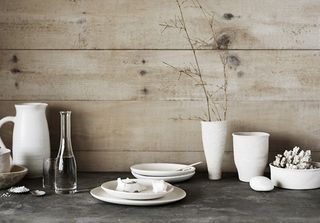
So we are pleased as punch to be included on Apartment Therapy’s list of 25 Sustainable Servingware & Tableware Sources just released yesterday for the holiday season. Their eco-friendly list is divided into three meaningful parts: 1) dishes made from mindful materials (we’re in here!), 2) servingware that’s fair trade, and 3) vintage tabletop ripe for re-use. (Image credit: Apartment Therapy)
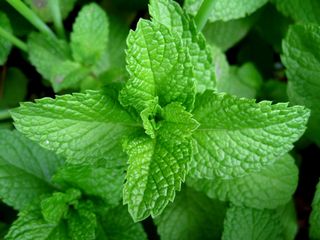
Mint leaf removal duty
20 November 2010 — This post may not initially appear to have anything to do with plastic. Just wait. Read on to the end.
I love mint tea. It’s a primal sort of thing. There is something about the smell of fresh whole peppermint that puts me in another state of being – it’s such an ethereal, magical fragrance. For me it’s tinged with comfy homey memories of Mom, cozy warmth, an Olbas oil neck massage, summer, deep velvety green, hot mint tea by the fire on a snowy winter day.
Right now I’m on peppermint leaf removal duty. This is not an arduous task. It is a supreme pleasure. My fingers are perfumed by the leaves. We share a garden with our neighbour Peter, and this mint comes from there. He’s a master gardener and master accordian player. Tons of talent, that guy; I learn a lot from him. I harvested it a few weeks ago and it has been drying on our basement radiant floor ever since. So tonight I decided to take all the dry leaves off the stems to prepare my winter stock of peppermint for tea. It’s slow going because there is a lot. I drink a lot of mint tea. When I’m done I’ll have a couple of large jars full of delectable mint leaves, just yearning to impart their magic through a boiling water bath for a few minutes. Then into my body to shimmer my soul.
If it Does not Say where it is Made, it is Probably Made in China
28 January 2010 — I don’t know about you, but I like to have as much information as possible about a product before I buy it so I can make an informed decision. One information that I find difficult to find on many shopping websites is the country of origin. This is an important information but on many websites, you can assume that if the place of origin of a product is not indicated, then it probably comes from China.
I generally prefer not to buy from China unless the product is absolutely unique, high quality and not available from a different country. My main reason for avoiding Chinese products is my deep empathy for what Tibetan people and other minorities are enduring in this country. Chinese dissidents who dare to criticize the government are arrested and jailed. I also have strong reservations about this country’s environmental policies. I must admit also that the 2007 melamine scandal still pops to my mind when I think of products made in China.