toxic america sign

TOXIC AMERICA on CNN with Dr. Sanjay Gupta: The chemicals that surround us…

2 June 2010 — CNN is about to premiere a feature special called Toxic America focusing on the toxic chemicals that surround us in everyday life, whether we realize it or not. The show will be hosted by Dr. Sanjay Guptaover two nights (June 2 and 3, at 8pm EST and PST) and will in large part focus on the health and environmental effects of toxins found in plastics. Here’s a little video promo of the series.

As explained on the website of the Center for Health, Environment and Justice, Night #1 (Wednesday) will be an “hour-long investigative story into the environmental health and justice problems plaguing the community of Mossville, Louisiana. Nestled amidst an alarming cluster of chemical plants, Mossville is home to more PVC chemical plants than anywhere else in the entire country, and has been dubbed the Vinyl Manufacturing Capital of America.”

Night #2 (Thursday) will deal with the effects of “hidden toxins” in all of us, particularly expectant mothers and their babies. It will also feature a profile on Jeanne Heagle, who has been living plastic-free for over 2 and 1/2 years. This investigative series links well with the stunning book we have talked about often in the past: Slow Death by Rubber Duck.
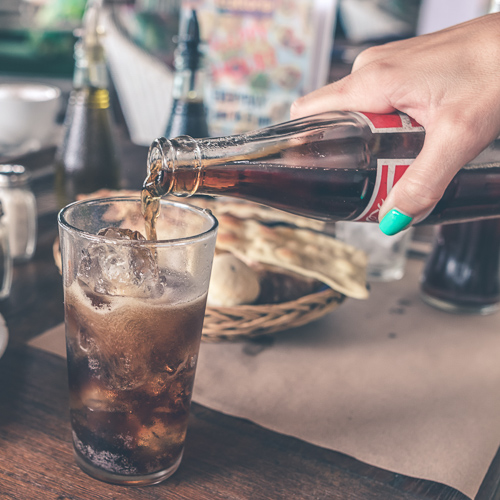
Sorry, More BPA Bad News – This Time Soft Drink Bottles

6 March 2009 — I had hoped my second official post to this blog would be happier than my first, but alas, there’s breaking bisphenol A news that needs to be shared.

A Health Canada study entitled Survey of Bisphenol A in Canned Drink Products was recently posted on the Health Canada website and published in the Journal of Agricultural and Food Chemistry.  Government scientists tested 72 kinds of canned pop – covering 84% of the market share of soft drink products sold in Canada – and found that 69 of them contained BPA at levels below the accepted daily intake pre-established by Health Canada. But peer-reviewed research increasingly indicates that exposure to extremely low amounts of BPA may lead to significant adverse health effects.  For example, look into the ground-breaking research of Frederick vom Saal, a global expert on endocrine disruptors, including BPA.

A Plastic Hummer or a Plant-Based Prius?

10 June 2009 — My 6-year old son is passionate about cars, trucks, tractors…essentially anything with motors and wheels.  The bigger the better.  He likes to taunt me by threatening that when he grows up he’s going to get a ‘plastic Hummer’.  Yikes, not what an ecologically minded parent running a plastic alternatives business loves to hear from his progeny.  But my son likes the Toyota Prius too, and is fascinated by the hybrid concept and the idea that one day soon we’ll be able to just plug in our car.  Now I can’t wait to tell him about the 2009 Prius, which incorporates various types of ‘ecological plastics’ throughout the car.  Toyota aims to have these materials eventually make up about 60% of the cars interior.  

Yikes – Wine in Plastic! I’ll Stick to Glass, Thanks

16 May 2009 — The Wine Industry Association of Western Australia doesn’t think moving from glass to plastic bottles for wine is necessarily a bad idea.  I don’t know about you, but it would make me not want to drink the wine.  And it appears the Southern Australian wine maker Wolf Blass has already begun to offer some of it’s wines in polyethylene terepthalate (PET) bottles. The main claimed justification is environmental:  i.e., that the plastic bottles create 29% less greenhouse gas emissions and are much lighter.  There does not appear to be any mention of the move to plastic bottles being significantly cheaper for the winemaker.  Greenwashing?  Perhaps it was inevitable in this often bottom-line, convenience-driven world we live in, but the thought of vino sitting and aging in plastic just does not seem right. 

Help Stop Plastic in the Sea – Support the Algalita JUNKride

12 April 2009 — It outnumbers surface plankton by 6 to 1 in parts of the world’s oceans, including the North Pacific.  It suffocates sea turtles from the inside out after they have ingested it thinking it is food.  It releases numerous toxic synthetic chemicals into the oceans.  Yes, plastic. 

If plastic pollution in the oceans is an issue that interests you or one you don’t know anything about, I would strongly suggest checking out the website of the Algalita Marine Research Foundation based in Long Beach, California.  The innovative studies being done by Captain Charles Moore and his committed team place them at the vanguard of marine pollution research – and the results they regularly document are alarmingly eye-opening. 

Our Plastic Bag Free Town Initiative Getting some Local Attention

20 March 2009 — I have already mentioned that our little village of Wakefield Quebec started a community-based group to try and eliminate the use of plastic bags. Our goal is to launch a pilot project in May that would involve generating a lot of information aimed at customers to encourage them to reduce their consumption of plastic bags. We want the movement to come from customers rather than retailers who would have to force consumers into paying for the bags. So our town newspaper just published an article featuring us on the cover page, arm wrestling over plastic and paper bags.

Plastic Bags are Good for the Health of the Planet, or so Says the Plastic Industry

3 March 2009 — Jay and I are involved in reducing the amount of single-use plastic bags being consumed on our little village of Wakefield (La PĂȘche), Quebec, Canada. In 2007 we became the first Fair Trade town in the province of Quebec, second in Canada (see www.fairtradevillage.ca), and now we want to tackle the ever expanding problem of plastic bags. So we formed a little committee with the objective of having something concrete to announce next May when we celebrate Fair Trade Month.

While researching what other towns in the world are doing to address this problem, we discovered that many towns (Leaf Rapids, Manitoba), large cities (San Francisco, New York), States (Texas, Colorado) and even countries (Ireland) around the world are also trying to reduce the use of carryout plastic bags. This is extremely encouraging. But we also found that the plastic bag industry will not hesitate to use hypocritical means to annihiliate these community efforts.

The War on Plastic

I just discovered this new product… It is a reusable plastic bag that comes with its neoGreenaidprene plastic pouch (plastic again) with the large text “WAR ON PLASTIC” written on the front of the bag. So what does this product really stage war against?

Does the Plastic Industry Really Care about your Health?

8 February 2009 — On January 19th 2009, Life Without Plastic was invited to attend the Ottawa launch of the campaign”Unbottle It!” by the Council of Canadians (“C of C”). The campaign aims at encouraging individuals to drink less bottled water and more tap water for environmental and health reasons. There is now so much reliance on plastic water bottles everywhere that schools, malls, offices are phasing out water fountains and municipalities are spending less money on water purification technology. We were told we must change this trend which encourages the proliferation of plastic water bottles.

Think Beyond Plastic 2013: Innovation and Beyond in Berkeley

24 June 2013 — What is innovation? To me it’s all about creative new change – creating an idea or product or process that changes and enhances the world in a new way. I think of it instinctively with a positive, world-bettering filter. Innovation is important because it can lead to new, positive, disruptive change. Fast. And in the world of plastic pollution – i.e., our shared world, because the plastic waste is now everywhere – new, positive, disruptive change cannot come fast enough.

Just over a week ago, I had the opportunity and privilege to attend the inaugural – and now to be annual – Think Beyond Plastic (TBP) Innovation Competition and Conference, held in Berkeley, California at the gorgeous and green David Brower Center on June 13-14, 2013. That coloured light bulb to my right is the TBP logo symbol, and is itself a visually delightful and innovative take on the light bulb – a perfect representation of the new rays of light and ideas unveiled last week and now radiating all over the world. The purpose of the competition and conference was to find and highlight disruptive solutions to the global plastic pollution crisis. Life Without Plastic was honoured to be a sponsor and enthusiastic supporter of TBP.