EDC cover

Serious Health Effects From Synthetic Hormone Disrupting Chemicals: UNEP/WHO Report

1 March 2013 — A joint report by the United Nations Environment Program (UNEP) and the World Health Organization (WHO) entitled, “State of the Science of Endocrine Disrupting Chemicals – 2012” was released on February 19, 2013. 

Endocrine disrupting chemicals (EDCs) leach from numerous types of plastic, and are now present throughout the environment, including in oceans and the air. 

The report is the most comprehensive overview of research on endocrine disrupting chemicals to date, and highlights associations between such hormone disrupting chemicals and serious health problems – for example, the potential for such synthetic chemicals to contribute to the development of non-descended testes in young males, breast cancer in women, prostate cancer in men, developmental effects on the nervous system in children, attention deficit /hyperactivity in children and thyroid cancer.
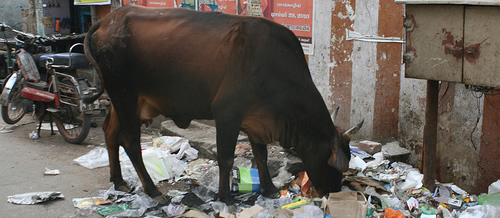
Cow eating plastic

Plastic kills. Just ask the cows…

We’re just back from India where Co-Owner Jay has three aunts and many cousins. It was a spicy, soothing and spiritual time visiting family in Mumbai, Kolkata and Delhi.  We also had excellent meetings with some of our suppliers. You can read more about our trip in our recent blogpost: India Rising…Above Plastic.

One thing that may astonish any new visitor to India is the sight of free-roaming cows. They go where they please. The holy cow, described by Mahatma Gandhi and others as the Mother of India, is considered sacred and protected from slaughter in most Indian states.  But there is much more to wandering cows than their holy stature.

schlori_girl_swimming

Learning to Swim Without Plastic!

22 July 2013 — Some who say we can’t live a modern life without plastic will cite plastic’s water-resistance properties as their main argument. It’s true that is is hard to find floating devices without plastic. So we were surprised and pleased to discover a swimming aid device made in Germany that is not only made entirely of cotton (except for one buckle) but is also better at helping kids and adults to learn to swim than its plastic counterparts. What is ingenious about these cotton swim floats is that they hold a child’s body in a natural swimming position in the water. Floating aids that wrap around the arms don’t help a child learn to swim. On the contrary, they prevent the natural arm movement needed to swim properly.

Coconutbliss frozen dessert

Bring A Frozen Desert to Work

14 October 2013 — Now that Klean Kanteen has released two fantastic insulated stainless steelcanisters (8 oz and 16 oz) with stainless steel lids, you can bring ice cream to work, guilt-free!… well almost… The insulated canisters will keep your food warm for about 4 hours and cold for up to 12 hours… that’s long enough for your favourite frozen desert to stay cool until snack time! Our guilty pleasure is the Vanilla Island Coconut Bliss, but of course, homemade is the best! Indulge!

Cookies

Two ingredient cookie recipe…and container savings

We recently discovered a scrumptious oatmeal cookie recipe that requires only 2 ingredients:  ripe bananas and oatmeal. No need for sugar, nor flour, just these 2 nutritious ingredients. We love it so much that we intend to make a huge batch of these cookies for close friends and family over the upcoming holidays, conveniently “wrapped” in one of our awesome stainless steel airtight containers. The container is part of the gift.

salad-spinner

Salad Without Plastic

We’ve not yet come across the right non-plastic salad spinner for our product line. There are sneaky ones out there touted as “stainless steel,” but that’s just on the exterior. The interior coming into contact with the greens is still plastic.

Our intrepid blogger friend, Beth Terry of My Plastic-Free Life, recently wrote a lovely blog about just this issue. She considers the traditional plastic ones we’ve likely all seen, and perhaps grown up with – but which are, yes, plastic. With some help from the indomitable Julia Child she discovers the traditional French and Swiss ones – some great options there! 

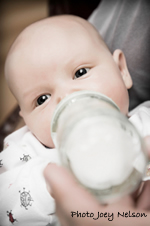
baby_bottle_j_nelson

Canadian Government Risk Assessment of Bisphenol A Leads to Proposal to Ban Polycarbonate Baby Bottles!

18 April 2008 — Canadian Government Risk Assessment of Bisphenol A Leads to Proposal to Ban Polycarbonate Baby Bottles!

A wonderful step forward for health and the environment! The Government of Canada announced today in Ottawa that a risk assessment of bisphenol A has been completed and has led the government to consider legally designating bisphenol A a ‘toxic’ substance hazardous to human health and the environment. This makes Canada the first jurisdiction in the world to begin taking tangible regulatory action against bisphenol A, which is the key chemical component in the plastic polycarbonate. Bisphenol A is used to make numerous common household items including many plastic baby bottles, reusable water bottles, large blue-coloured water storage bottles for water dispensers, and the lining of some food cans.

A new study links chemical Bisphenol A (BPA) to inability to form brain synapses

5 September 2008 — A new study links chemical Bisphenol A (BPA) to inability to form brain synapses. A new Canadian-US study found that BPA, the controversial chemical found in plastic bottles made of polycarbonate, may prevent the brain from building vital connections between neurons. This effect is in addition to imbalances to the reproductive system that this chemical is suspected of causing

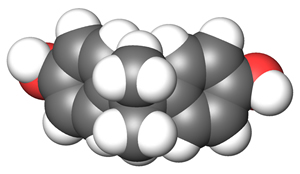
bisphenol_a-3d_300

Canadian Government Declares Bisphenol A Toxic!

18 October 2008 — Canadian Government Declares Bisphenol A Toxic! – Canada has become the first country in the world to designate bisphenol A (BPA) toxic to human health and the environment. By adding BPA to the Toxic Substances List (Schedule 1) of the Canadian Environmental Protection Act, the Government can now take concrete action against BPA, and has announced that it ”will immediately proceed with drafting regulations to prohibit the importation, sale and advertising of polycarbonate baby bottles that contain bisphenol A (BPA).